
Overdrive Wins Schneider Electric Challenge at the Singapore – Japan Fast Track Programme
Introduction
Brownfield building interoperability represents one of the biggest challenges in the journey toward smart and sustainable built environments. Many rely on legacy, proprietary systems that were never designed to interoperate, making large-scale modernisation complex, costly, and slow.
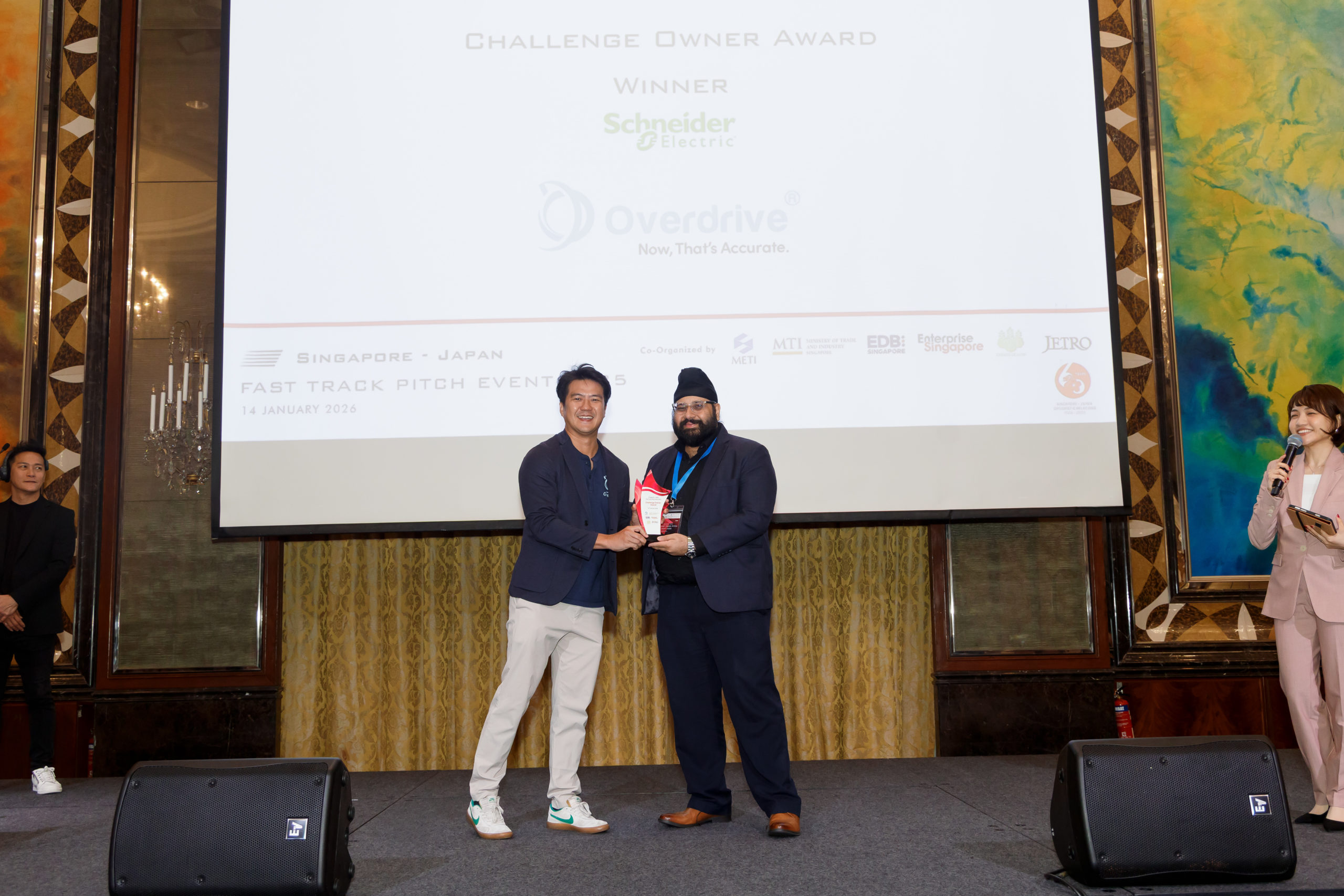
As part of the Singapore–Japan Fast Track programme, Schneider Electric posed a challenge focused on addressing this interoperability gap. Overdrive is proud to share that we were selected as the winning team, recognising our approach to enabling scalable integration across fragmented building systems.
The Challenge of Brownfield Building Interoperability
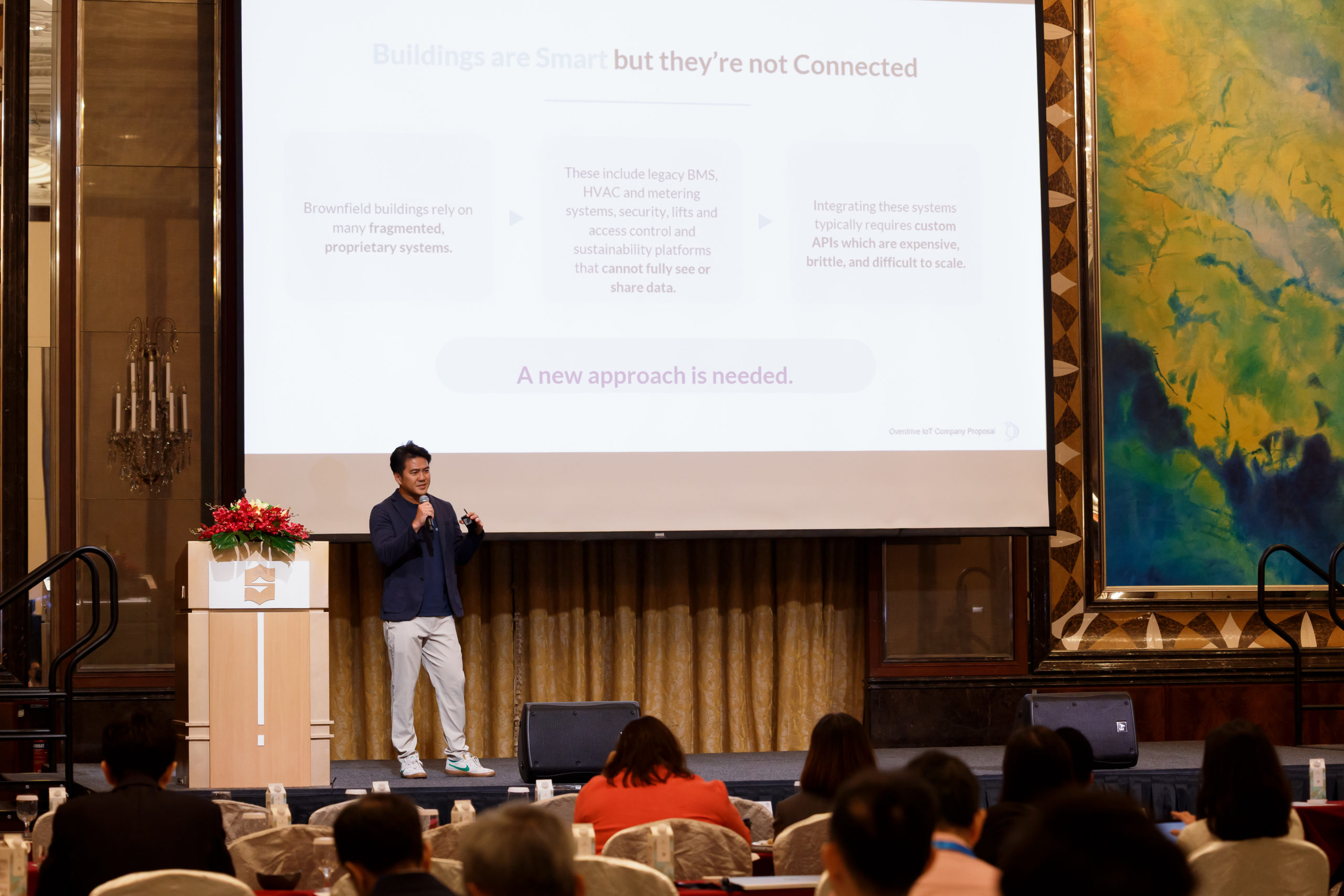
Brownfield environments typically operate a mix of legacy Building Management Systems (BMS), HVAC controllers, energy meters, access control systems, and vendor-specific monitoring platforms. While these systems may function independently, their lack of interoperability limits:
- Operational visibility across buildings and portfolios
- Deployment of advanced energy optimisation solutions
- Accurate sustainability and emissions reporting
- Scalability of PropTech innovation
Traditional point-to-point integrations are often expensive, time-consuming to deploy, and difficult to reuse, making them unsuitable for large, multi-building portfolios.
Applying Proven Aviation Integration Experience
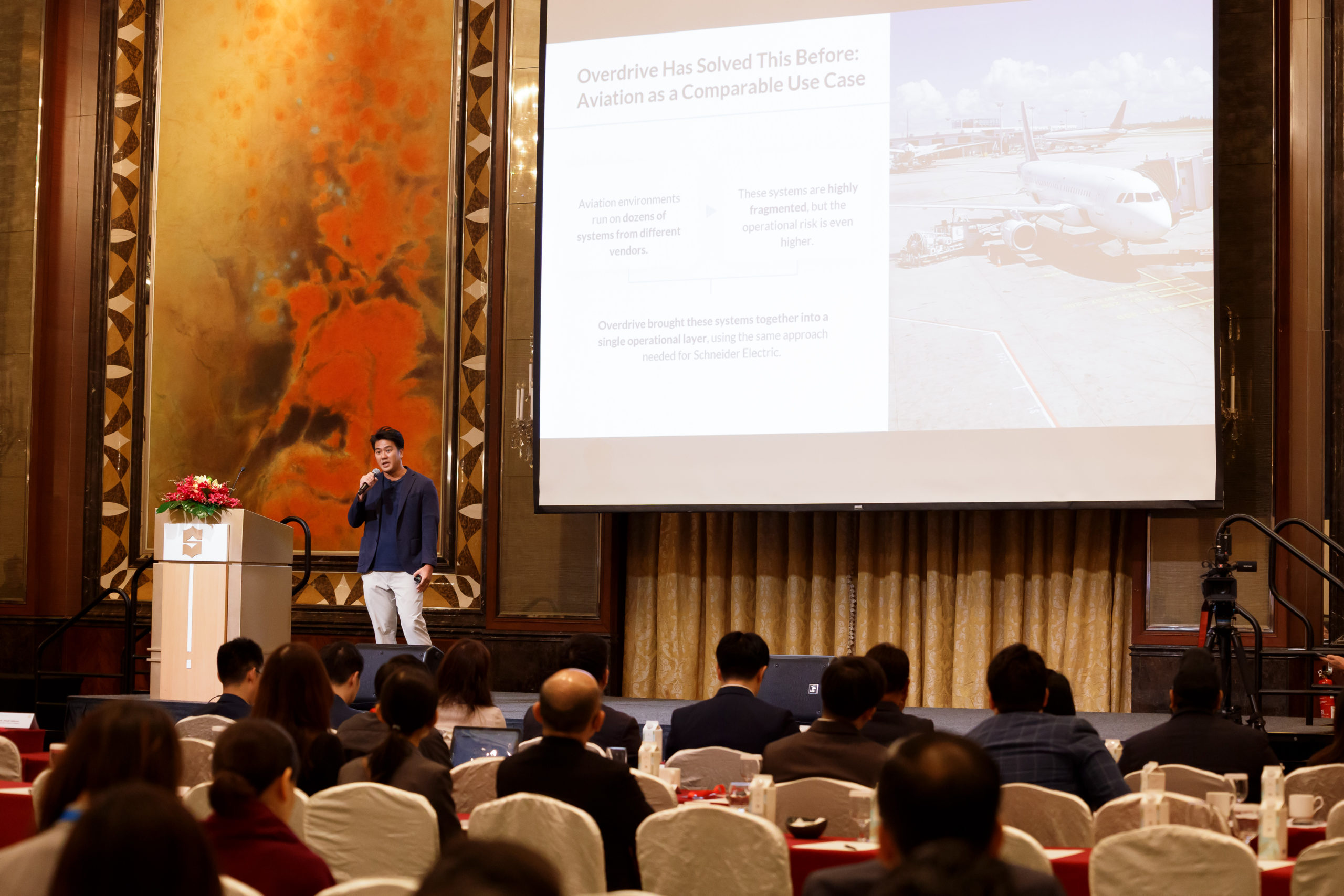
At Overdrive, this challenge closely mirrors the complexity we address in aviation environments.
Airports operate dozens of mission-critical systems — from ground operations and asset tracking to energy and building management — supplied by multiple vendors and operating across different protocols. These systems must interoperate reliably in real time, with no tolerance for downtime.
Overdrive has successfully unified such fragmented aviation systems into single operational platforms using protocol-agnostic middleware, custom connectors, and real-time orchestration. These deployments, including at major international airports such as Changi Airport, demonstrate how complex, legacy-heavy environments can be modernised without replacing existing infrastructure.
Our Proposed Solution: A Scalable Interoperability Layer
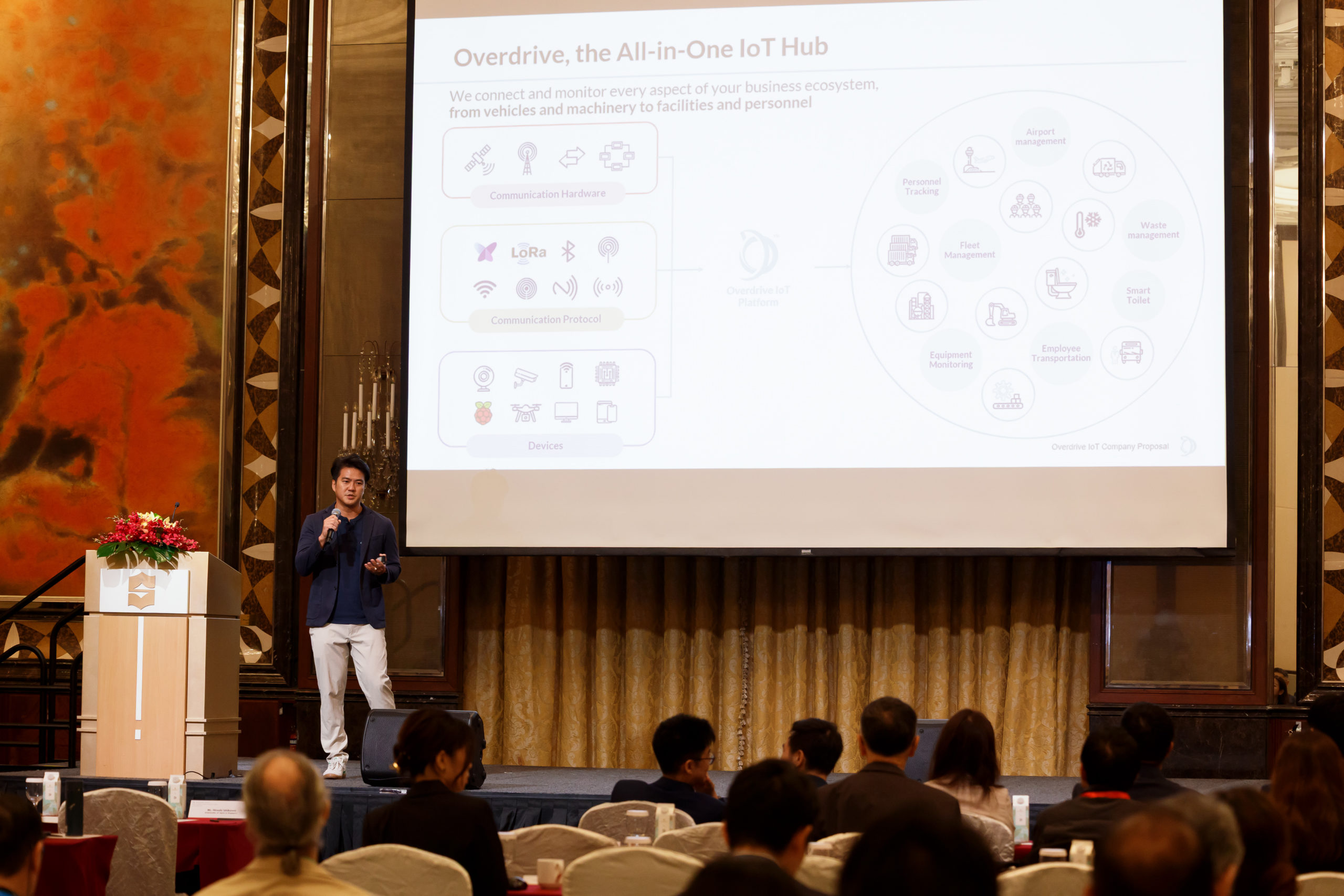
For the Schneider Electric challenge, Overdrive proposed extending this proven approach to the built environment.
Our solution centres on a scalable middleware interoperability layer that:
- Integrates legacy and proprietary building systems
- Normalises data across vendors and protocols
- Enables two-way communication for optimisation, not just monitoring
- Supports reuse across buildings, portfolios, and regions
By acting as a common integration layer, this approach allows brownfield buildings to connect seamlessly with modern digital and sustainability platforms, creating a strong foundation for smart building capabilities and future innovation.
Why This Matters
Winning the Schneider Electric challenge validates the transferability of Overdrive’s integration expertise beyond aviation and into smart and sustainable buildings. More importantly, it reinforces the role of interoperability as a foundational enabler — particularly in brownfield environments where constraints are highest.
This approach allows organisations to modernise existing infrastructure incrementally, reduce integration complexity and cost, and accelerate sustainability outcomes without large-scale system replacement.
Looking Ahead
We would like to thank Schneider Electric for the opportunity and the valuable discussions during the SE Innovation Hub Tour, as well as the Singapore–Japan Fast Track programme for fostering collaboration between corporates and technology innovators.
Overdrive looks forward to continuing discussions with Schneider Electric on next steps, including pilot deployments and broader application of this interoperability approach across real-world built environments.


