
Why Safety Incidents Still Happen: The Gap Between Policy and Real-Time Awareness
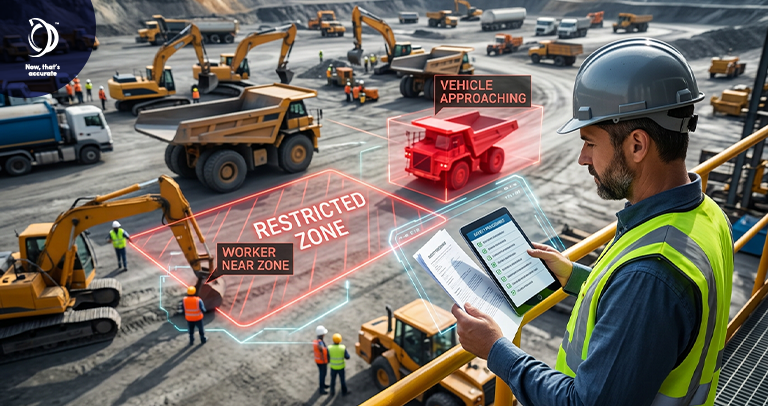
Every organisation wants a safe workplace. Safety policies are established. Employees receive training. Restricted areas are clearly defined. Procedures explain how vehicles, equipment and personnel should operate. Yet safety incidents and near misses can still happen.
Why? Because having the right safety procedures does not always mean teams have complete awareness of what is happening across an operation at every moment. A vehicle can approach a restricted area unexpectedly. A worker may enter a hazardous zone. Equipment can move without the control centre immediately knowing. A potential collision risk can develop within seconds.
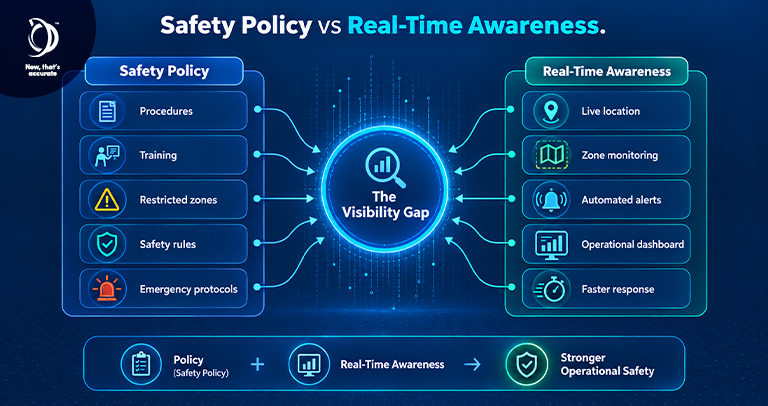
In dynamic operational environments, the situation on the ground can change faster than information reaches the people responsible for responding. This creates an important gap between safety policy and real-time operational awareness. Closing that gap does not mean replacing existing safety procedures. Instead, technologies such as real-time location tracking, geofencing and automated alerts can provide an additional layer of visibility that helps organisations identify potential risks earlier and respond more quickly.
Why Strong Safety Policies Are Still Essential
Safety policies establish the rules that keep operations organised and controlled. Depending on the industry, these may include:
- Designated vehicle routes
- Restricted or hazardous zones
- Speed limits
- Equipment operating procedures
- Personnel access requirements
- Emergency response procedures
- Vehicle and pedestrian separation
- Mandatory safety training
These measures remain fundamental to workplace safety. However, policies generally define what should happen. The challenge for operations teams is understanding what is actually happening right now. For example, a policy may state that vehicles must not enter a particular zone without authorisation. But can the operations team immediately see when a vehicle is approaching that area? Can the driver be warned before crossing the boundary? Can the appropriate personnel be notified when the event occurs? This is where operational visibility becomes important.
Why Safety Incidents Can Still Happen
Most incidents are not simply the result of having inadequate policies. Operational environments are dynamic. People move. Vehicles move. Equipment moves. Conditions change. Priorities shift. Several factors can create a gap between established safety procedures and actual conditions on the ground.
1. Human Awareness Has Limits
Employees can be well-trained and still make mistakes. Fatigue, distractions, unfamiliar environments, workload and changing operational conditions can affect situational awareness. A driver may unintentionally approach the wrong operational zone. A worker may not notice a nearby moving vehicle. A supervisor may not immediately know that someone has entered a restricted area. Training reduces risk, but it cannot provide continuous visibility of every person, vehicle and asset simultaneously. Technology can provide an additional layer of awareness by continuously monitoring predefined operational conditions.
2. Manual Communication Takes Time
Radio communication, phone calls and messaging remain important tools in many operational environments. However, they require someone to first identify a situation and then communicate it. Consider a vehicle moving towards a restricted area. Without automated monitoring, someone must notice the movement, identify the vehicle, contact the driver and communicate the warning. Even a short delay can matter in a fast-moving environment. Real-time alerts can shorten this information chain by notifying the relevant people when predefined conditions occur.
3. Supervisors Cannot See Everything at Once
Large operations can involve hundreds of vehicles, employees and assets moving simultaneously. A supervisor may be responsible for multiple areas while also handling schedules, incidents, communications and operational decisions. Physical observation alone cannot provide complete visibility across an entire site. Real-time location information can provide operations teams with a broader view of activity from a central platform.
4. Static Safety Measures Cannot React to Changing Conditions
Signs, barriers, floor markings and designated routes are important safety controls. However, they are static. They cannot automatically recognise that a vehicle is approaching a restricted zone or notify a control centre that an unexpected movement has occurred. Digital geofencing can complement physical safety controls by creating virtual operational boundaries. When a tracked vehicle, asset or person interacts with a predefined zone, the system can record the event or generate an alert based on configured rules.
5. Safety Information May Arrive After the Event
Traditional safety reporting is often retrospective. An incident occurs. The event is reported. The organisation investigates what happened. The findings are then used to improve future procedures. This process remains important, but organisations can also benefit from information while an event is developing.
Real-time monitoring helps shift part of the safety process from:
“What happened?”
towards:
“What is happening now?”
and potentially:
“Is there a developing situation that requires attention?”
From Reactive Safety to Proactive Awareness
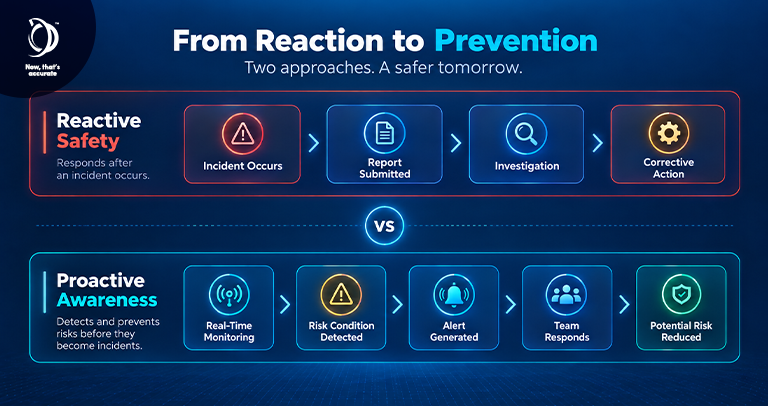
Traditional safety management often focuses heavily on responding to events after they occur. Real-time operational visibility adds another capability: identifying predefined risk conditions while operations are still happening. For example, an organisation might monitor when:
- A vehicle approaches a restricted zone
- Equipment enters an unauthorised area
- Personnel enter predefined operational zones
- A vehicle deviates from an approved operating area
- An emergency or panic alert is activated
This gives teams additional information that may help them respond before a developing situation becomes more serious. The objective is not to replace human judgement. It is to give people better information at the moment they need it.
What Is Real-Time Safety Visibility?
Real-time safety visibility is the ability to monitor relevant operational activity as it occurs. Depending on the environment, this could include visibility of:
Personnel: Understanding the location of workers within monitored operational areas.
Vehicles: Monitoring vehicle locations, movements and interactions with predefined zones.
Assets and Equipment: Knowing where critical equipment is located and whether unexpected movement has occurred.
Operational Zones: Monitoring entry, exit and proximity to restricted or controlled areas.
When this information is brought into a central platform, safety and operations teams gain a more complete operational picture.
How Geofencing Supports Safer Operations
Geofencing allows organisations to create virtual boundaries around physical locations. These boundaries can represent:
- Restricted areas
- Hazardous zones
- Runways or operational areas
- Vehicle routes
- Worksites
- Storage areas
- Controlled-access locations
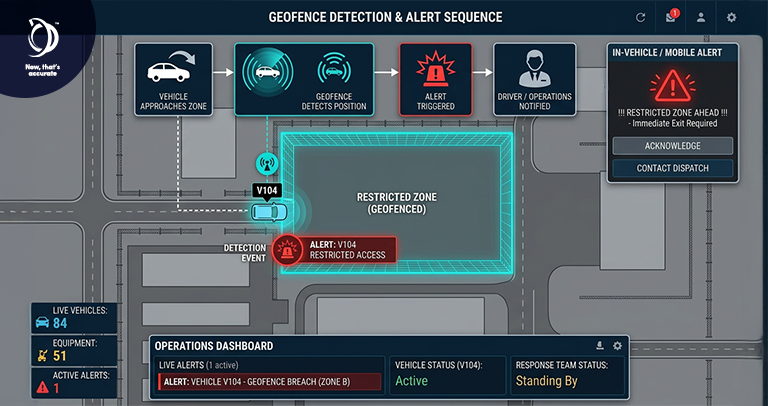
When a connected vehicle, asset or person enters, exits or approaches a predefined zone, the system can trigger an appropriate event or notification. This helps organisations turn physical safety rules into digitally monitored operational conditions.
Why Real-Time Alerts Matter
Visibility is valuable, but employees cannot spend their entire shift watching a dashboard. This is where alerts become important. Instead of requiring someone to continuously monitor every movement, predefined rules can identify events that require attention. For example:
Vehicle approaching restricted operational zone.
The appropriate person can then assess the situation and determine whether action is required. This creates an exception-based approach to safety monitoring. Teams continue operating normally while the system helps draw attention to predefined situations that may require intervention. Importantly, alerts must be designed carefully. Too many unnecessary notifications can create alert fatigue, reducing their effectiveness. The objective should therefore be to provide the right alert, to the right person, at the right time.
Real-Time Visibility Doesn’t Replace Safety Procedures
This distinction is important. Technology should not be viewed as a replacement for:
- Employee training
- Safety procedures
- Physical barriers
- Signage
- Radio communication
- Supervisory oversight
- Emergency protocols
Instead, real-time visibility complements these existing controls. Think of it as another layer of operational awareness. A trained employee understands the rules. A physical sign communicates the boundary. A supervisor provides oversight. A real-time monitoring system provides additional visibility into whether predefined operational conditions are occurring. Together, these layers can support a stronger approach to operational safety.
Industries Where Real-Time Safety Visibility Matters
The need for real-time awareness is particularly relevant in environments where people, vehicles and equipment operate close to one another.
1. Aviation
Airside environments involve aircraft, ground support equipment, service vehicles and personnel operating within tightly controlled areas. Real-time vehicle visibility and zone monitoring can support greater situational awareness across these complex operations.
2. Construction
Workers, contractors, vehicles and heavy equipment frequently move across changing worksites. Location visibility can support monitoring of defined work and restricted areas.
3. Logistics & Warehousing
Forklifts, vehicles, employees and goods operate simultaneously across warehouses, yards and loading areas. Monitoring movement and operational zones can help teams identify predefined safety events.
4. Manufacturing & Industrial Operations
Factories and industrial sites may contain restricted areas, mobile equipment and hazardous operational zones where greater visibility can support existing safety controls.
5. Waste & Environmental Services
Collection vehicles, heavy equipment and field teams frequently operate across dynamic environments where real-time visibility can improve operational awareness.
How Overdrive Supports Real-Time Operational Safety
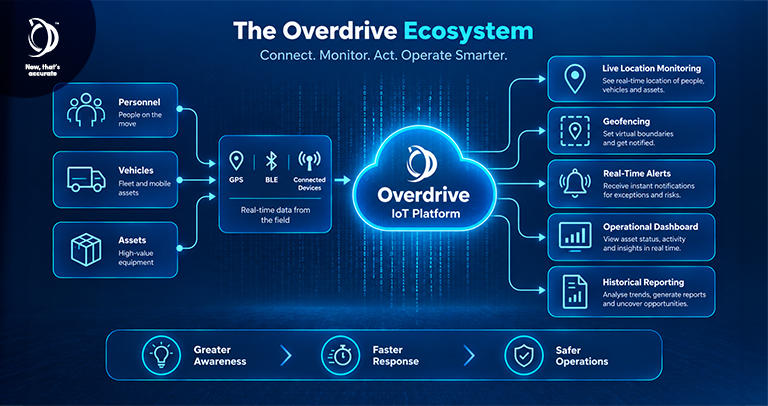
Overdrive IoT helps organisations gain real-time visibility across connected personnel, vehicles, equipment and assets. Depending on the operational environment, technologies such as GPS, BLE and connected IoT devices can provide location and status information to the Overdrive platform. Organisations can use this information to:
- Monitor vehicle, personnel and asset locations
- Establish digital operational and restricted zones
- Receive alerts based on predefined conditions
- Improve visibility across large operational environments
- Review historical movements and events
- Support faster coordination between field teams and control centres
For airport environments, Overdrive’s aviation solutions can also support specialised safety requirements such as runway incursion awareness and vehicle collision risk monitoring. The purpose is simple: help operations teams see important events earlier and give them the information needed to respond faster.
Conclusion
Strong safety policies remain fundamental to safe operations. But policies alone cannot provide continuous awareness of everything happening across a dynamic operational environment. People move. Vehicles move. Equipment moves. Conditions change. The gap between established procedures and real-time conditions is where additional operational visibility can make a difference. By combining existing safety practices with technologies such as location tracking, geofencing, real-time alerts and centralised monitoring, organisations can gain greater awareness of developing situations and respond more quickly when attention is required. The future of operational safety is therefore not simply about creating more rules. It is about giving teams the visibility they need to apply those rules effectively in real time.
See risk earlier. Respond faster. Operate safer.
Frequently Asked Questions
Why do safety incidents still happen despite strong policies?
Safety policies define how work should be performed, but changing conditions, human factors and limited real-time visibility can still create risks during daily operations.
What is real-time operational safety visibility?
It is the ability to monitor relevant personnel, vehicles, assets and operational events as they occur, giving teams greater situational awareness.
How can IoT improve workplace safety?
IoT technologies can provide real-time location and status information, enabling organisations to monitor predefined zones and generate alerts when specific conditions occur.
What is geofencing in workplace safety?
Geofencing creates virtual boundaries around physical areas and can trigger events when connected vehicles, assets or personnel enter, exit or approach those zones.
Can real-time tracking prevent all safety incidents?
No technology can eliminate every safety risk. Real-time tracking provides an additional layer of awareness that complements training, procedures and other safety controls.
Which industries can benefit from real-time safety monitoring?
Aviation, construction, logistics, manufacturing, waste management and other environments involving mobile workers, vehicles or equipment can benefit from greater operational visibility.


