
The Real Cost of Lost Tools on Construction Sites
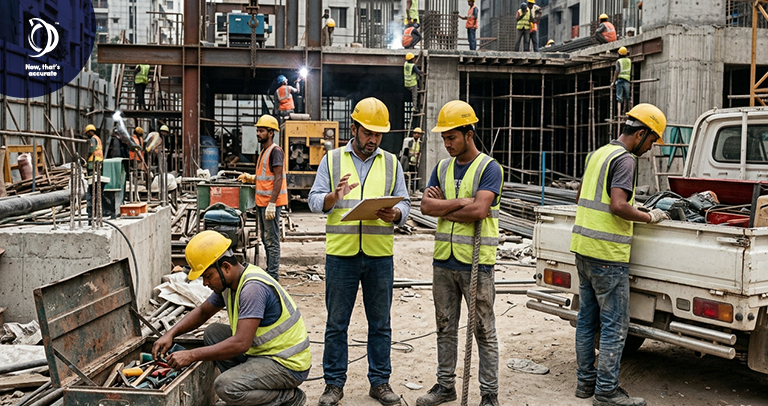
A missing tool may seem like a small problem. However, on a busy construction site, one lost drill, scanner, power tool, or piece of specialist equipment can disrupt several people at once.
A worker stops the assigned task and begins searching. A supervisor checks storage areas and asks other teams whether they moved the equipment. Meanwhile, another worker may wait for the same tool before starting the next stage of work.
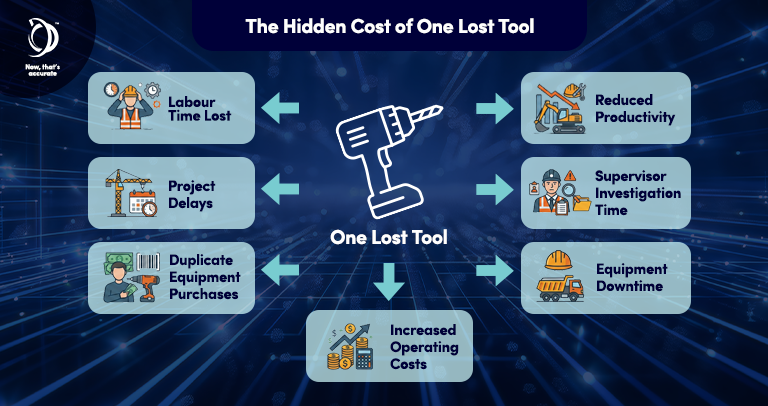
The replacement cost may be visible on an invoice. The cost of lost time, delayed work, duplicated purchases, and disrupted schedules is much harder to see.
This is why construction companies increasingly use real-time asset tracking to monitor tools and equipment across job sites.
What Is the Real Cost of a Lost Tool?
The true cost of a missing tool includes more than its purchase price.
It can include:
- Time spent searching for the tool
- Labour hours lost while work is paused
- Delays to dependent tasks
- Emergency rental or replacement expenses
- Duplicate purchases
- Reduced equipment utilisation
- Administrative time spent investigating the loss
For example, imagine that a specialist tool goes missing during a scheduled installation. Three workers spend 20 minutes looking for it, while a supervisor calls another team to check whether they borrowed it.
Even if the team eventually finds the tool, the company has already lost productive time. When this happens repeatedly across several projects, the operational cost becomes significant.
Why Do Tools Go Missing on Construction Sites?
Tools do not always disappear because of theft. In many cases, teams simply lose visibility when assets move between workers, vehicles, storage areas, and project locations.
Common causes include:
1. Tools move without a record
A worker may borrow a tool for another task without updating the sign-out sheet. The tool remains on site, but the original team no longer knows where to find it.
2. Equipment returns to the wrong location
At the end of a shift, workers may place tools in a different container, vehicle, or storage room. As a result, the next team wastes time checking several locations.
3. Manual records become outdated
Spreadsheets and paper logs only remain accurate when every person updates them consistently. In fast-moving environments, updates may happen late or not at all.
4. Assets move between multiple projects
Construction companies often transfer shared tools between job sites. Without a central tool tracking system, managers may not know whether an asset is available, in transit, under maintenance, or still assigned to another project.
Why Manual Tool Tracking Is Not Enough?
Manual tracking methods can record who received an item. However, they rarely provide a live view of its current location or status.
A spreadsheet may show that a worker signed out a tool in the morning. It cannot confirm whether the tool remains with that worker, moved to another work zone, or left the site.
Similarly, phone calls and group messages may help teams locate equipment, but they rely on someone remembering where the asset was last seen.
As the number of assets, workers, and locations increases, manual tracking becomes harder to maintain. Therefore, construction teams need a system that records asset movement automatically.
How Does Construction Asset Tracking Work?
A construction asset tracking system uses technologies such as BLE, RFID, GPS, or cellular IoT to identify and monitor equipment.
The right technology depends on the type of asset and the level of visibility required.
BLE tracking
Bluetooth Low Energy, or BLE, is suitable for tools and equipment used within defined areas. BLE tags can help teams identify whether an asset is inside a site, room, storage area, or designated zone.
RFID tracking
RFID can support structured check-in and check-out processes. Teams can use it to record when assets pass through specific points or move between authorised locations.
GPS tracking
GPS is more suitable for vehicles, mobile machinery, trailers, and higher-value equipment that moves across wider outdoor areas.
Hybrid IoT asset tracking
Some operations need more than one technology. For example, a company may use GPS for vehicles and BLE for the tools stored inside them.
A unified platform can bring this information together and provide a more complete view of the operation.
How Real-Time Asset Tracking Reduces Tool Loss
Real-time tracking helps teams answer practical questions without starting a manual search:
- Where is the tool now?
- Where was it last detected?
- Which site or zone contains it?
- Has it left an approved area?
- Is another team currently using it?
- How long has it remained inactive?
This visibility supports faster action.
For example, when a tool leaves a designated work zone, the system can generate an alert. A supervisor can then investigate before the asset moves farther away or disappears from the site completely.
Location history can also help teams identify the tool’s last known movement rather than checking every possible storage area.
Asset Tracking Also Improves Equipment Utilisation
Construction companies sometimes buy additional tools because they cannot confirm where existing equipment is located.
However, the asset may already be available at another site or sitting unused in storage.
An equipment tracking system can show:
- Which assets are active
- Which assets are idle
- Where each asset is located
- Which project currently holds it
- Whether it is available for reassignment
As a result, managers can allocate existing equipment more effectively and reduce unnecessary purchases.
What Should a Construction Tool Tracking System Include?
A useful tracking system should do more than display dots on a map.
Construction teams should look for:
1. Live or near-real-time location visibility
Managers should be able to identify the current or last known location of each asset.
2. Location history
A digital movement record helps teams investigate missing tools and understand how assets move through the operation.
3. Geofence alerts
The system should notify authorised personnel when equipment enters or leaves a defined area.
4. Asset assignment
Teams should be able to connect assets with workers, vehicles, projects, or departments.
5. A centralised dashboard
Information from different tracking technologies should appear in one platform rather than several disconnected systems.
6. Reports on usage and inactivity
Utilisation data can help companies identify idle, underused, or frequently unavailable equipment.
How Overdrive Supports Construction Asset Tracking
Overdrive provides an IoT asset tracking solution that helps organisations monitor tools, equipment, vehicles, and other operational assets through one connected platform.
Depending on the operational environment, Overdrive can combine GPS, BLE, RFID, sensors, and other IoT technologies to provide the appropriate level of visibility.
Through a centralised dashboard, construction teams can:
- Monitor asset locations
- Review movement history
- Receive automated alerts
- Track assets across different sites
- Improve equipment allocation
- Reduce manual reconciliation
- Strengthen operational visibility
Instead of relying on separate spreadsheets, calls, and tracking platforms, teams can access relevant asset information from one system.
Frequently Asked Questions
What is construction asset tracking?
Construction asset tracking is the process of monitoring tools, equipment, vehicles, and machinery across construction sites. It may use GPS, BLE, RFID, or other IoT technologies to record asset location, movement, status, and usage.
Can asset tracking prevent tool theft?
Asset tracking cannot physically prevent every theft. However, it can improve detection by showing an asset’s last known location and generating alerts when equipment leaves an authorised area.
What is the best technology for tracking construction tools?
BLE and RFID are often suitable for smaller tools within a site. GPS is generally more appropriate for vehicles and equipment that travels across larger outdoor areas. The best option depends on the asset, environment, required accuracy, and reporting needs.
Can asset tracking work across multiple job sites?
Yes. A central asset tracking platform can provide visibility across several projects, storage areas, vehicles, and operational locations.
How does tool tracking improve construction productivity?
Tool tracking reduces the time workers spend searching for equipment. It also helps managers allocate assets more efficiently, prevent duplicate purchases, and ensure that teams have the equipment needed for scheduled work.
Conclusion
The greatest cost of a lost tool is often not the tool itself. It is the interruption created around it.
Every search, phone call, delayed task, and emergency replacement adds friction to the project. Over time, those interruptions can reduce productivity and increase operating costs across several job sites.
With real-time construction asset tracking, teams can locate equipment faster, improve asset accountability, and make better use of the tools they already own.
Looking to improve visibility across your tools and equipment? Contact Overdrive to learn how our asset tracking solution can support your construction operations.


